


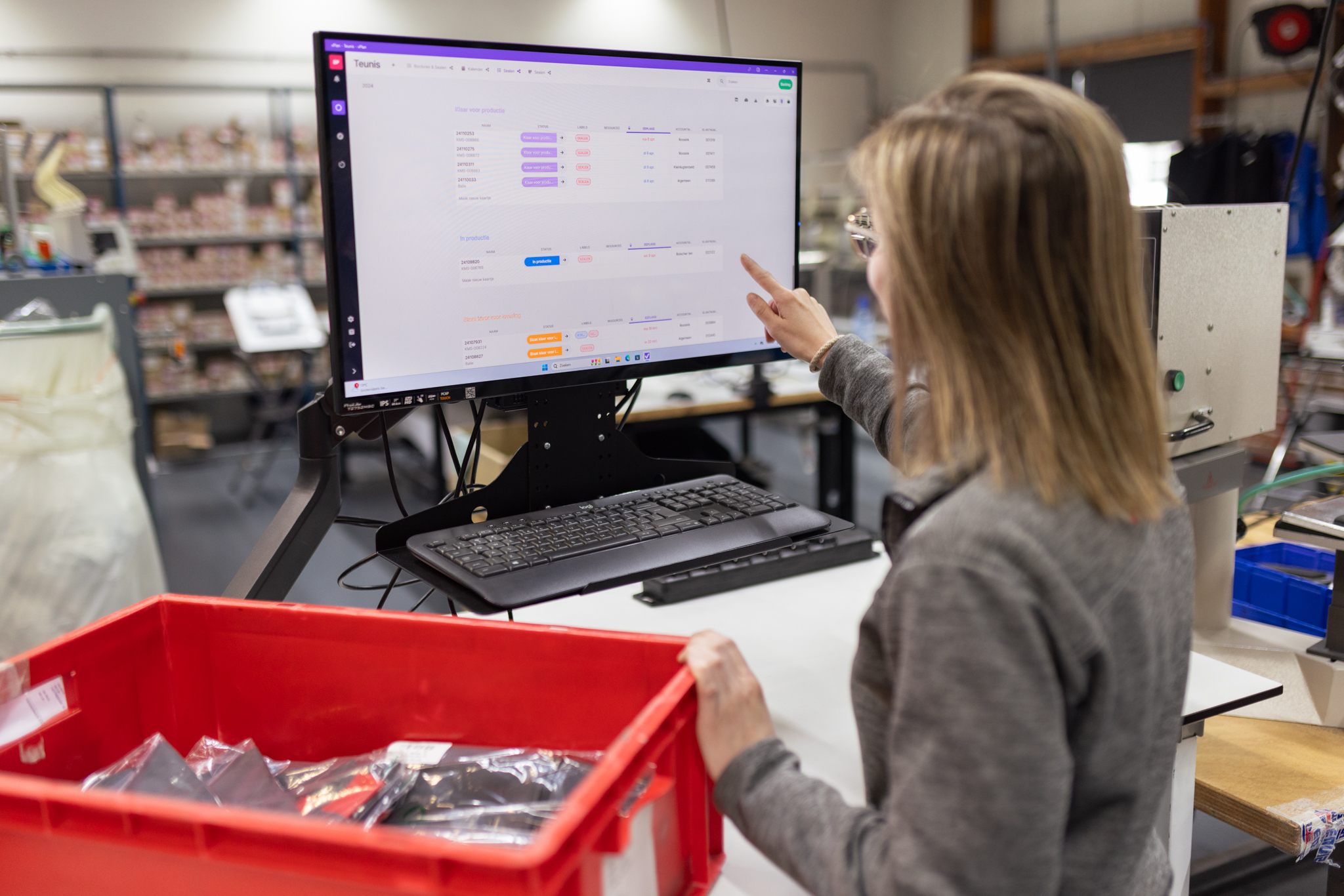
Good production planning can help prevent many of these problems. It gives you a clearer overview, helps you spot potential bottlenecks earlier and makes it easier to respond to changes. These five practical tips will help you gain more control over your production process and delivery times.
1. Take your available capacity into account
A fully booked production schedule might look productive, but you still need enough people, machines and time to get the work done.
Let's say you've scheduled ten production orders for next week. Everything seems to fit, until you realise that one of your machine operators is on holiday and a key machine is due for half a day's maintenance. Suddenly, things are looking rather tight.
That's why it's important to check your available capacity before scheduling work. Take holidays, maintenance and other time-consuming activities into account. This helps you create a realistic schedule and avoid taking on more work than you can handle.
2. Leave some room in your schedule
An urgent order comes in, a delivery is delayed or a machine starts playing up. Almost every manufacturing company has to deal with situations like these from time to time.
Leaving some room in your production schedule for unexpected work can make a real difference. Particularly if you regularly receive urgent orders, a little extra flexibility can go a long way.
How much room you need depends on your production process and how often things change. For example, take a look at how much time you've spent on unplanned work over the past few weeks. This will give you a better idea of how much flexibility you should build into your schedule.
3. Keep track of your production orders
An order is scheduled for completion on Friday. But by Wednesday, do you actually know whether it's still on track?
Many manufacturing companies still track progress manually or discuss it during production meetings. That can work perfectly well, but it sometimes makes it difficult to get an accurate picture of each order's status throughout the process.
Make sure you regularly check how work is progressing. Which orders are on schedule? Where are delays occurring? And which tasks need extra attention?
With up-to-date insight into progress, you can take action sooner. You might still have time to reschedule certain tasks or allocate additional capacity to meet a deadline.
4. Make dependencies visible
In manufacturing, different tasks often need to be completed in a particular order. A component might need to be machined before it can move on to assembly. After that, it may need to pass a quality check before the order is ready for dispatch.
When one of these stages takes longer than expected, it can affect the rest of the production process.
That's why it's important to understand which tasks depend on each other and the order in which they need to be completed. This makes it easier to assess how a delay might affect the final delivery date.
It also helps you organise work more efficiently. Perhaps another order can be brought forward while you're waiting for a particular production stage to be completed.
5. Make sure everyone works from the same schedule
The production schedule has been updated in the office, but the shop floor is still working from the old version. It happens more often than you might think, especially when changes are communicated through separate spreadsheets, emails or WhatsApp messages.
This can lead to confusion and unnecessary delays.
A centralised production schedule ensures everyone has access to the same up-to-date information. Employees know which tasks are planned, what needs to be prioritised and when something changes.
This makes collaboration between the office and the shop floor much smoother and reduces the risk of important updates being missed.
Gain more control over production and delivery commitments with vPlan
Good production planning helps you stay organised and respond more effectively to changes. With vPlan, you can keep your entire production schedule clear and bring all the important information together in one place.
Plan production orders based on the available capacity of your employees and machines. Your visual schedule shows which tasks are planned, where workloads are building up and which orders need extra attention.
When something changes in production, you can easily adjust your schedule and keep everyone informed. This helps you respond faster and gives you greater control over your delivery times.
Discover how to improve your on-time delivery performance
Want to see how this works in practice? On Tuesday 8 December, our colleagues Jasper and Nick are hosting a free webinar on improving delivery reliability in manufacturing.
They'll show you how vPlan helps you gain better insight into your capacity, identify bottlenecks earlier and easily adjust your production schedule when needed.

Work at vPlan
We are looking for new colleagues.


